Before you ever sit down at a machine, a few basic hand sewing stitches will teach you how needle, thread and fabric work together. They are simple to learn, endlessly useful, and the foundation everything else builds on. Here are the essential stitches every beginner should know, and what each one is good for.
1. Running stitch
The simplest stitch of all: the needle goes in and out of the fabric in a straight, even line. It is used to join fabric temporarily, to gather, and as the basis for hand quilting. If you learn just one stitch first, make it this one.
2. Backstitch
The backstitch doubles back on itself, creating a strong, continuous line that holds firmly. It is the hand-sewn equivalent of a machine straight stitch, and the one to reach for when a seam needs to actually stay together.
3. Basting (tacking) stitch
A long, loose running stitch used to hold fabric in place temporarily before permanent sewing. You sew it quickly, then remove it once the real seam is done. Basting saves countless mistakes.
4. Hemming stitch
Used to finish the edge of fabric — turning under a raw edge and securing it so it lies flat and neat. A good hemming stitch is nearly invisible from the front, which makes garments and home items look properly finished.
5. Whip stitch & slip stitch
The whip stitch wraps over an edge to bind two pieces together (handy for closing up a stuffed plushie). The slip stitch closes a gap almost invisibly, perfect for finishing linings and openings.
Tips for neat hand stitching
- Keep your thread short — around the length of your forearm — to avoid tangling.
- Aim for even spacing rather than tiny stitches; consistency looks tidier than speed.
- Use a thimble to push the needle through thicker fabric without hurting your finger.
- Practise on a scrap first to find a comfortable rhythm.
From hand stitches to the machine
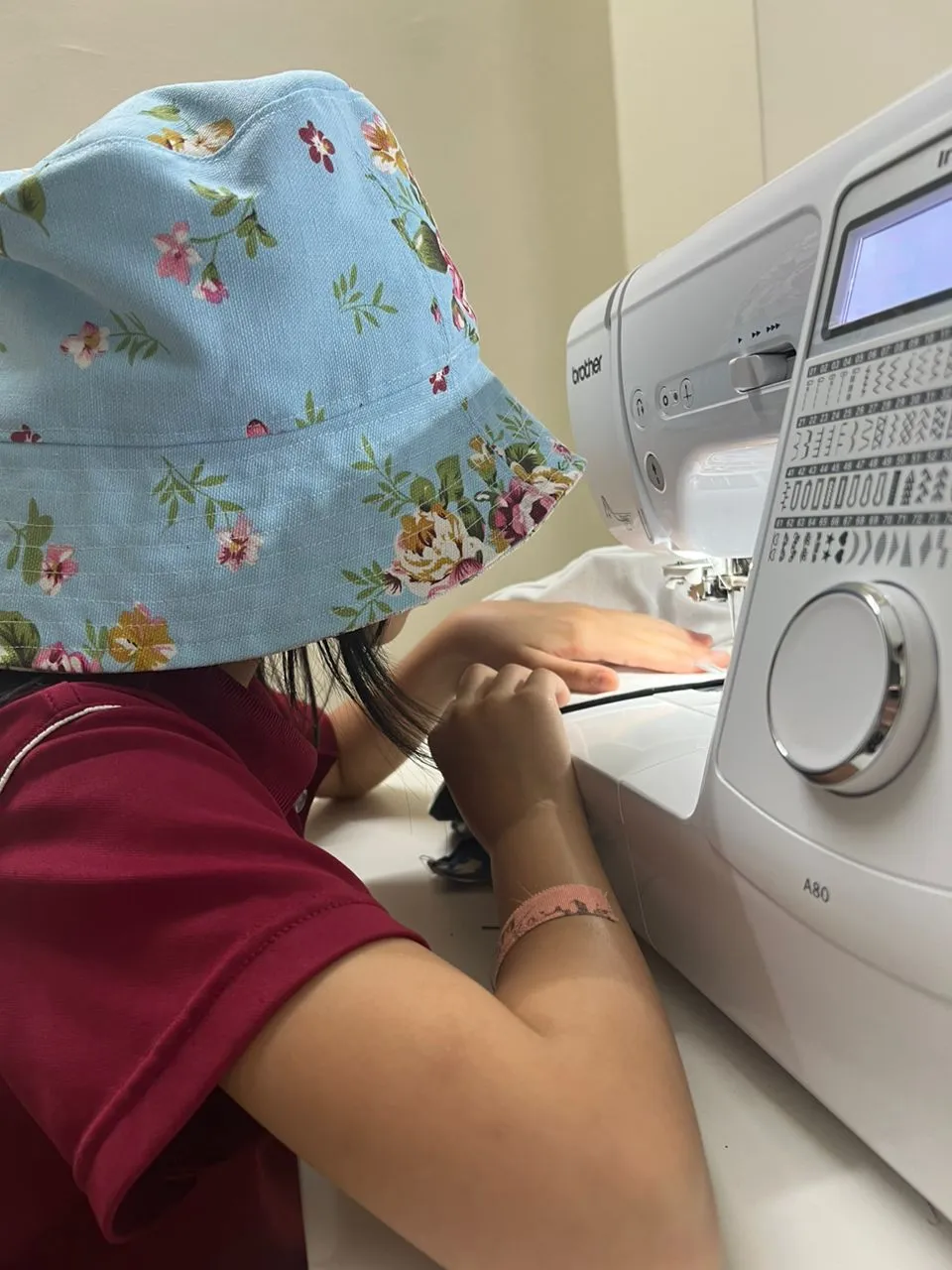
Once these feel natural, you are ready for the next step: using a sewing machine for the first time. Hand stitches and machine sewing complement each other — many projects use both. If you are mapping out your learning, our beginner's guide to starting sewing shows where stitches fit in the bigger picture.
Learn hands-on in a class
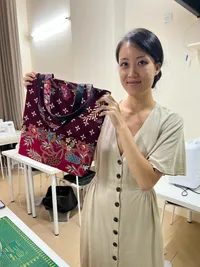
Stitches are far easier to learn when someone can watch your hands and gently correct them. In our beginner classes at Two Moles in Subang Jaya, you practise these exact stitches in your first sessions — running stitch, backstitch, hemming and more — before moving on to your first project. The Introduction class (RM195) is a lovely place to begin.
Frequently asked questions
Which hand stitch should I learn first?
The running stitch. It is the simplest and teaches the basic in-and-out motion all other stitches build on.
Do I still need hand sewing if I have a machine?
Yes — hand sewing is best for finishing details, closing gaps, and fixes a machine can't easily reach. The two work together.
What thread and needle should a beginner use?
A general-purpose polyester thread and a medium "sharps" hand needle suit most beginner projects. You will find these in a basic sewing kit.
Want a teacher to guide your hands? Message us on WhatsApp or explore our classes.